What is arts, is it produced only by artists, or is it something that people have routinely created throughout humanity’s existence?
This is a question central to the Mingei Movement in the early 20th century.
Mingei theory was defined by Yanagi Soetsu (1889-1961).
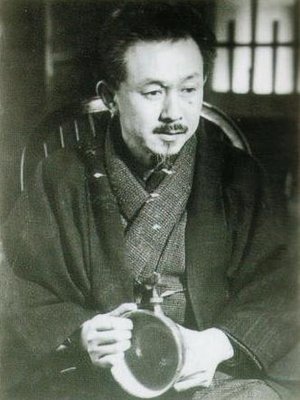
They promoted works of the ordinary craftsmen that spoke to the spiritual and practical needs of everyday life.
https://www.toki.tokyo/blogt/2016/12/12/mingei-the-revival-of-japanese-folk-art
Inspired by the British arts and crafts movement, which had come about for the same reason, of an aesthetic and spiritual desire to balance out the newly introduced mass production and industrialisation.
Minge works are defined as:
1) produced by hand
2) inexpensive
3) egalitarian
4) functional in daily life
5) representative of the regions in which they were produced
The Minge artists included the likes of Hamada Shōji, Kawai Kanjirō and British Potter Bernard Leach, Munakata Shikō, andSerizawa Keisuke.
THE MODERN CELEBRATION OF MINGEI THROUGH BORO FASHION
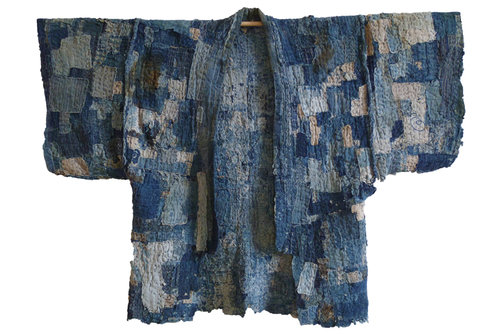
A traditional type of patchworking that allows better insulation and practicality that has become an art form in itself.
A blog I follow -this one is all about Boro:
https://furugistarjapan.wordpress.com/2011/02/18/boro-japanese-folk-fabric/
Fits nicely with collage.

 Sarah Chalkie Cloonan